

Trying to figure out how much a photo shoot should cost can feel like you're trying to hit a moving target. You might see a photographer offering a basic portrait session for $150, while another quotes over $3,500 for a wedding. What gives?
The final price tag hinges on a few big things: the type of shoot, how experienced the photographer is, and what's actually included in the package.
An Honest Look at Average Photo Shoot Prices
When you first start looking, the price differences can be jarring. Why is one family session $200 and another, seemingly similar one, $800? The best way to get your bearings is to understand the typical starting costs for different kinds of photography.
Think of these numbers as a baseline. They’re a solid representation of what you can expect to invest for professional work, before we start layering in the other factors that make prices tick up or down (we'll get to those in a bit). For now, let's just get a clear picture of the market.
Typical Costs for Popular Photo Shoots
Drilling down into the numbers, you'll see pretty distinct pricing tiers based on how complex and demanding a shoot is. It makes sense, right? A wedding is a high-stakes, once-in-a-lifetime event that lasts for hours, so it's naturally going to command a higher price than a planned, one-hour portrait session. The skill, pressure, and time involved are just on different levels.
Specialized services all have their own established price ranges. For example, professional wedding photographers typically charge between $1,500 and $3,500, and that number can go way up from there. General event photography usually lands somewhere between $500 and $1,000.
More personal shoots, like family photos, often run from $145 to $500, with engagement and individual portraits falling into a similar bucket. If you want to dig deeper into the industry data, IBISWorld's detailed report offers some great insights. It all helps explain why asking "how much does a photo shoot cost?" is never a simple question.
The price reflects not just the moments captured, but the expertise, preparation, and peace of mind a professional photographer provides. It’s an investment in preserving memories flawlessly.
To make things a little easier, I've put together a quick-reference table that breaks down the average prices for the most common types of photo shoots. It's a handy way to see how the costs stack up at a glance.
Average Photo Shoot Prices by Type
| Photo Shoot Type | Average Price Range |
|---|---|
| Wedding Photography | $1,500 – $3,500+ |
| Event Photography | $500 – $1,000 |
| Family Portraits | $145 – $500 |
| Engagement Session | $150 – $500 |
| Individual Portraits | $150 – $370 |
These averages should give you a solid foundation for building your budget. As you keep reading, you'll learn exactly what factors—from the photographer's experience to the final photos you receive—can push these numbers up or down.
Ever wonder why one photographer quotes you $300 for a portrait session, while another asks for $3,000 for something that sounds… pretty much the same? It’s not random, and it’s definitely not just about the camera they use.
The price tag on a photo shoot is a reflection of a whole lot more than just the hour they spend with you. Think of it like hiring any skilled artisan. You’re investing in their years of training, their unique artistic vision, and the expensive professional gear they’ve mastered. That’s what allows them to handle tricky lighting, compose shots that make you say "wow," and make the whole experience feel effortless.
Experience and Artistic Skill
A photographer's experience is probably the single biggest factor driving their rates. A seasoned pro who has shot hundreds of weddings can anticipate moments before they happen—a skill a newcomer is still trying to figure out. You're paying for their ability to consistently deliver amazing images, even when the pressure is on.
But it goes beyond just technical skill. It's about their unique artistic style. Two photographers can shoot the exact same scene and create two completely different moods. One might deliver bright, airy photos, while another goes for a dark, dramatic feel. You’re paying for their specific creative eye, the one that made you stop scrolling and fall in love with their portfolio in the first place.
This chart gives you a quick look at how average prices can shift depending on the type of shoot, which is often tied to the complexity and skill needed.
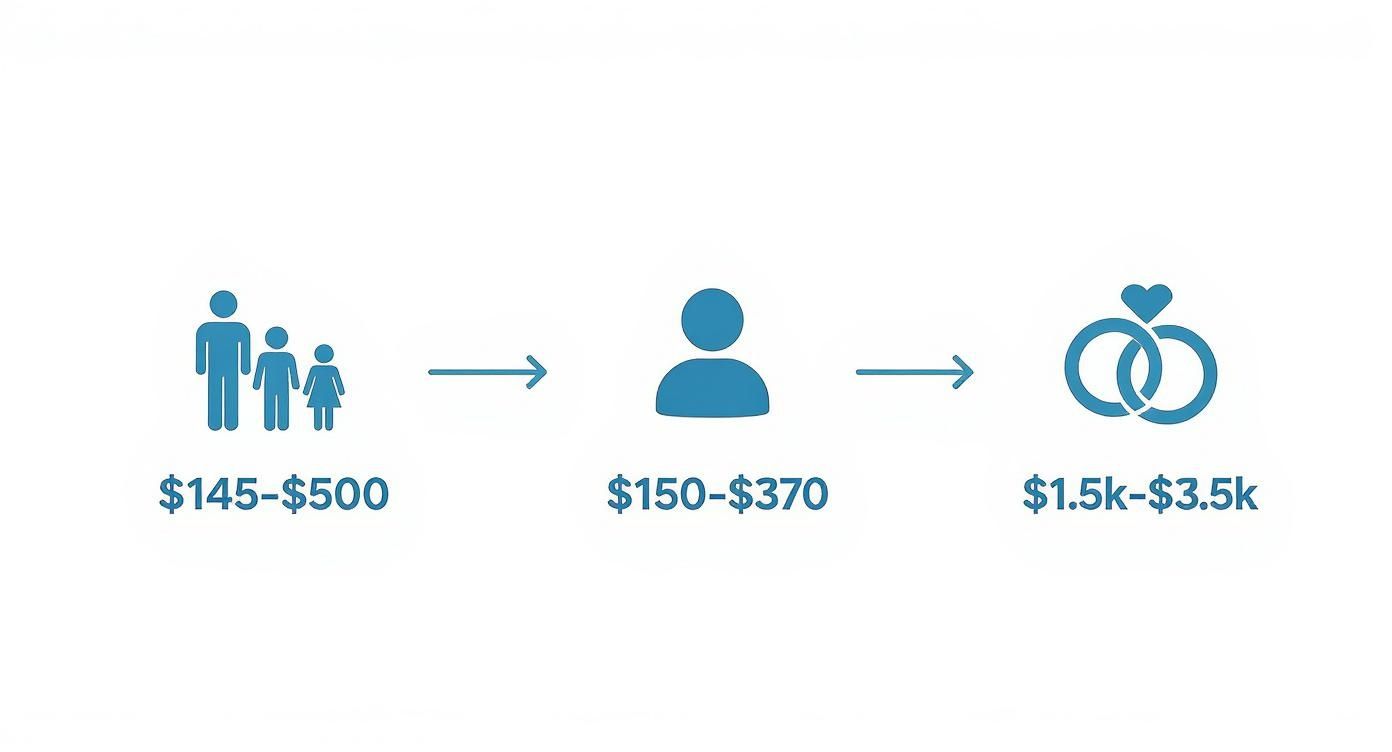
As you can see, weddings sit at the top of the price range. That’s because they’re long, complex, high-stakes events where you only get one shot to capture those once-in-a-lifetime moments.
Tangible Cost Factors of a Shoot
Beyond the artist’s talent, a few practical things directly build up the final quote. Think of these as the building blocks of your photography package. Knowing what they are makes the price make a whole lot more sense.
- Session Duration: The longer the shoot, the higher the cost. This isn’t just the time they’re actively clicking the shutter; it includes travel, setup, and teardown time, too.
- Number of Final Images: Getting that gallery of perfectly polished photos takes time—a lot of time. A package with 50 edited images is naturally going to cost more than one with just 10.
- Editing and Retouching: Basic edits like color correction and cropping are usually standard. But if you need extensive retouching—like removing blemishes, swapping heads, or taking objects out of the background—that requires a ton of extra work and will add to the bill.
- Location and Permits: A simple studio shoot is one thing, but shooting on location is another. Some parks, historic buildings, or private venues require permits or charge fees, and those costs are typically passed on to you.
The final quote is a comprehensive calculation of a photographer’s time, talent, and tangible business expenses. It covers everything from pre-shoot planning and the session itself to hours of post-production work.
Getting all these details sorted out up front is key. To get a better handle on this, it helps to learn how to define your project scope so you and your photographer are on the same page from the get-go. This kind of clarity avoids any surprises and makes sure the final price for your photo shoot perfectly matches what you’re looking for.
How Photographers Structure Their Pricing

Trying to make sense of photographer quotes can feel like learning a new language. But once you get a handle on the different ways pros bill for their work, you can compare offers with total confidence and find the perfect match for your project.
There’s no single, universal method. Instead, photographers pick a model that works for their specialty, their business costs, and the kinds of clients they serve. Let's break down the most common structures you'll run into.
Comparing Photography Pricing Models
Before diving deep into the specifics, it helps to see the main pricing philosophies side-by-side. Each one is designed for a different type of project and client, so understanding the landscape is your first step.
| Pricing Model | How It Works | Best For |
|---|---|---|
| Hourly/Day Rates | You pay a set rate for the photographer's time, either by the hour or for a half/full day. | Short, predictable shoots like headshots, small events, or projects with a clear time commitment. |
| All-Inclusive Packages | A single, flat-fee price that bundles the session with a specific set of deliverables (e.g., photos, prints). | Clients who want price certainty and a complete, pre-defined experience like portraits, family photos, or weddings. |
| À La Carte (Creative Fee + Products) | You pay an upfront "creative fee" for the shoot itself, then purchase photos and products separately afterward. | Clients who want maximum flexibility and control over the final cost, allowing them to buy only what they love. |
Seeing it laid out like this makes it easier to spot which model aligns best with your needs and budget. Now, let’s get into the nitty-gritty of each one.
Hourly and Day Rates
This is the most straightforward approach. With an hourly rate, you pay for the photographer's time in clear, predictable chunks. It’s a popular choice for shorter, well-defined jobs like corporate headshots or a small party where the scope is easy to pin down.
A close cousin is the day rate. This is the go-to for longer gigs like weddings, all-day conferences, or big commercial shoots. You’re essentially booking the photographer for a full or half day, which gives you cost certainty for extensive coverage and simplifies billing when the exact end time might be a little fuzzy.
All-Inclusive Packages
Packages are a massive hit for a reason: they bundle services and products into one flat-fee price. Think of it like a combo meal—you get the main course plus all the best sides for a single, transparent cost. This model completely removes the guesswork from budgeting.
A typical portrait package might look something like this:
- A 60-minute session at a chosen location.
- A set number of professionally edited digital images (say, 25 high-resolution photos).
- An online gallery for you to view and share your shots.
- A print release, giving you permission for personal use.
For bigger projects, getting everything down on paper is crucial. Using a solid creative brief template ensures you and the photographer are on the exact same page about what the final package includes. Check out our guide here: https://creativize.net/blog/creative-brief-template
A good package simplifies everything. It bundles the most-requested services to give you a complete experience without the headache of making a dozen tiny decisions along the way.
À La Carte Pricing
The polar opposite of a bundled package is the à la carte model. This approach lets you build your own experience from a menu of individual items. You start by paying a base session fee—often called a "creative fee"—which covers the photographer’s time, talent, and the shoot itself.
After the session, you purchase any photos, prints, albums, or other products you want separately. This structure gives you the ultimate flexibility, letting you invest only in the images and products you truly can't live without.
In niche markets, you'll often see specialized post-production work, like professional real estate photo editing services, offered as an à la carte add-on. This model puts you in complete control of the final cost, making sure the price of your photo shoot aligns perfectly with your budget and priorities.
Why Niche Photography Has Unique Pricing
Let's get one thing straight: not all photo shoots are the same. Their price tags shouldn't be, either. The cost of a photo shoot is a direct reflection of the unique skills, risks, and gear involved. When you dive into specialized fields like wedding, commercial, or newborn photography, you're not just paying someone to click a button—you're hiring a specific kind of expertise.
Think of it like this: you've got your family doctor and you've got a heart surgeon. Both are medical professionals, but the surgeon's specialized training and the life-or-death nature of their work mean they command a much higher fee. A niche photographer is the heart surgeon of their field, bringing a level of skill that a general portrait photographer just might not have.
High Stakes and High Demand
Wedding photography is the perfect example of a high-stakes specialty. The photographer gets one shot—that's it. One chance to capture the first look, the vow exchange, the teary-eyed toasts. There are no do-overs. That kind of pressure demands a pro who can nail it under any condition, whether it's a sudden downpour or a dimly lit reception hall.
This is exactly why wedding photographers sit in the premium tier of the market. Commercial photography has its own set of rules, too, where pricing is often tied up in image usage rights and the sheer scope of the project. Getting a handle on these factors is a lot like understanding a full video production cost breakdown, where the final number is all about how big the project is and where the final product will be seen.
Specialized Skills and Safety
Some niches demand more than just a good eye; they require very specific, hands-on training. Newborn photography is a great case in point. This isn't just about cute pictures; it's about safely posing a fragile, days-old baby. A trained newborn photographer knows how to handle an infant, keep the studio toasty warm, and create those beautiful, sleepy portraits without ever compromising the baby’s safety or comfort.
That level of specialized care and expertise naturally bumps up the price. And the numbers really tell the story of how different these specialties are. Wedding photography averages around $2,500, while a complex commercial shoot can run anywhere from $2,000 to $10,000. On the other hand, a highly skilled newborn session lands between $320 and $650, a price that reflects the unique training involved.
When you hire a niche photographer, you’re not just paying for photos. You are investing in their specialized knowledge, their ability to navigate high-pressure situations, and the peace of mind that comes with knowing the job will be done right.
These unique pricing models are all built around the value of that specific expertise. Whether it’s the non-negotiable reliability you need from a wedding photographer or the gentle, trained hands of a newborn specialist, the price tag is a direct reflection of the job's unique challenges and responsibilities.
Let’s Talk About Real Value in Photography
It might feel like the cost of a good photo shoot is constantly on the rise. But here’s something that might surprise you: professional photography has actually gotten more accessible over the years, not less.
The explosion of digital cameras and powerful editing software completely changed the game. It blew the doors open for a new wave of talented artists to hang a shingle and start their own businesses. This created a much more dynamic and competitive market. Now, you have more options than ever—from fresh talent building a portfolio to seasoned pros with decades of wisdom. Bottom line? There's a photographer out there who fits your budget and your vibe.
How Technology Shook Up Pricing
The digital revolution didn't just give us more photographers; it rewrote the entire workflow. Remember the days of expensive film, smelly darkroom chemicals, and waiting forever to see the results? Gone. Digital tech made the whole process way more efficient.
This shift allows photographers to spend less time on the mechanical side of things and more time on what you're actually paying for: the art of capturing a perfect, fleeting moment.
But it’s crucial to remember the difference between the tool and the artist. Just because anyone can buy a fancy camera doesn't mean they can create professional-quality work.
A great photographer's value isn't in their gear. It’s in their eye for composition, their mastery of light, and their ability to make you feel completely at ease in front of the camera.
When you hire a pro, you're not just buying a folder of JPEGs. You're investing in a curated experience and a final product that simply can’t be replicated with a smartphone. It’s the vision, the technical skill, and the storytelling that set them apart and make the investment worth it.
The Surprising Affordability of Photography
This mix of new technology and a bustling market has created a fascinating economic trend. Data shows that between 1997 and 2025, photography services saw an average annual deflation rate of -0.56%.
What does that even mean? It means the real-world cost of professional photography has actually gone down over the last 28 years. A service that cost $20 back in 1997 would be priced around $17.10 today in real terms. That’s a 14.49% drop. Pretty wild, right? You can dig into more of the data on photography price inflation to see the trends for yourself.
So, as you're looking at different photo shoot prices, keep this in mind: you're getting incredible value. You’re hiring a skilled professional in a competitive market, all while benefiting from tech that makes their services more affordable than they were for your parents' generation.
Budgeting for Your Photo Shoot Like a Pro

Alright, now that you know what goes into photographer pricing, it's time to turn that knowledge into a game plan. Think of your budget as a roadmap, not a restriction. It’s what helps you invest confidently and get the perfect photos without any financial surprises.
The first step is simple: figure out your must-haves versus your nice-to-haves. This is where you get really honest with yourself. Is getting 50 fully edited images an absolute necessity, or would 25 incredible shots tell your story just as well? Nailing down your core priorities is the single most important thing you can do.
Once you have that list, try to shift your perspective from "cost" to "investment." These photos, whether for your family album or your company's website, are assets that will provide value for years. Looking at it this way helps you focus on finding a photographer whose style you genuinely love, rather than just snagging the cheapest deal you can find.
Your Pre-Booking Checklist
Before you sign on the dotted line, you want to be crystal clear on everything. A few smart questions upfront can save you a world of headaches and hidden fees later, ensuring you and your photographer are on the same page from day one.
- Confirm Deliverables: Ask them straight up: "How many edited images will I get, and what format will they be in?" You'll want to know if they're high-resolution files ready for printing.
- Clarify Usage Rights: Get the scoop on what you’re allowed to do with the photos. Can you post them all over social media? Use them on your business site? Get this in writing.
- Inquire About Turnaround Time: A simple "When can I expect to see the final gallery?" sets expectations and saves you from anxiously checking your inbox.
- Ask About Hidden Fees: Don't be shy. Directly ask if there are extra charges for things like travel, location permits, or significant retouching requests.
A transparent contract is the foundation of a great client-photographer relationship. It protects both parties and ensures there are no surprises, just beautiful photos.
If you’re working with a tight budget, there are always creative solutions. You could explore some clever alternatives to a traditional wedding photographer that might fit your needs perfectly. And if you're a creative yourself, playing around with a freelance rate calculator can give you a solid baseline for what professionals in the field are charging. This kind of homework empowers you to find a fantastic photographer who delivers the goods without breaking the bank.
A Few Common Questions About Photo Shoot Prices
When you're getting ready to book a photographer, a few practical questions almost always come up. Thinking through the details on payment, what you'll get, and any potential extra costs ahead of time is the best way to make sure everything goes smoothly.
Let's clear up some of the most common ones.
Deposits and Deliverables
Do I need to pay a deposit?
Yep, just about every professional photographer will ask for a deposit—often called a retainer fee—to officially get you on the books. This is usually 25-50% of the total price. It’s a standard practice that locks in your date, protecting both you from losing your spot and the photographer from last-minute cancellations.
Are digital files included in the price?
It really depends on the photographer's package. A lot of all-inclusive options will give you a specific number of high-resolution digital files. Other pricing models, however, might have you purchase them separately after the shoot. It's super important to clarify exactly what your package includes to avoid any surprises down the road.
Potential Costs and Negotiations
What hidden costs should I watch for?
It’s smart to keep an eye out for potential extras that might not be in the first number you see. Some common add-ons can include:
- Travel fees if your dream location is outside their normal service area.
- Permit fees that some parks, venues, or public spaces require for professional shoots.
- Charges for extensive retouching that goes beyond their standard editing.
- The cost of prints or albums if they aren't bundled into your package.
Is it okay to negotiate a photographer's prices?
Some photographers have set-in-stone rates, but others might have a bit of wiggle room, especially if you’re booking a custom package or shooting during their off-season. It never hurts to politely ask if they can put together a collection that fits your budget. For more on this, check out our guide on how to negotiate freelance rates for some deeper insights.
Ready to connect with top-tier creative talent for your next project? Creativize makes it easy to find and hire verified local professionals. Explore our network today!