

So, what's the going rate for a professional photo shoot? The honest answer is: it varies. A lot. You could be looking at anywhere from $100 for a quick mini-session to over $5,000 for an extensive commercial project.
The final number on the invoice comes down to a few key things: the photographer’s experience, what kind of shoot you need, and what’s actually included in the package. Getting a handle on these variables is the first step to finding a great photographer who fits your budget.
What Goes Into a Photo Shooting Price
Ever get a quote from one photographer for $200 and another for $2,000 for what seems like the same job? It's a common head-scratcher. But it’s not just about clicking a button. A photographer's fee covers way more than the time they spend with a camera in hand.
Think of it like hiring a chef for a big event. You aren't just paying for the groceries; you're paying for their skill, creativity, and the entire experience they bring to the table. The price tag reflects a whole mix of costs—some obvious, some not—that all lead to those polished final images.
Beyond the Shutter Click
The number you see on a quote is really an investment in a whole creative process. It covers the work that happens before, during, and long after the camera comes out of the bag.
- Consultation and Planning: This is where it all starts. We're talking initial meetings, back-and-forth emails, and calls to nail down your vision. The photographer then gets to work scouting locations, planning shot lists, and sorting out logistics. It's why it's so helpful to define the project scope from the get-go.
- Professional Equipment: That pro-level gear isn't cheap. Photographers invest thousands in high-end cameras, a whole collection of lenses, lighting setups, and powerful software. This is the toolbox that makes those crisp, high-quality images possible.
- Post-Production Work: The shoot itself is often just the beginning. For every hour spent shooting, a photographer might spend two or three more hours editing. This is the meticulous part—culling the best shots, correcting colors, retouching, and getting the final files perfect for you.
The reality is that the final price reflects not just an hour of shooting, but years of training, thousands of dollars in equipment, and countless hours of unseen work that make your photos truly stand out.
Pricing in the photography world can be all over the map. In the United States, for instance, photographers often charge between $94 to $262 per hour. Day rates can start at $300 for someone just starting out and climb to over $3,000 for top-tier professionals.
The Key Factors Driving Photography Costs
Trying to understand a photographer's pricing can feel a bit like looking under the hood of a car. Two quotes might seem worlds apart, but a lot is going on behind the scenes that determines the final cost. It's way more than just the time they spend with a camera in hand.
One of the biggest factors is, without a doubt, the photographer's experience and reputation. A pro with a decade of experience and a portfolio full of high-profile clients will have a higher rate than a newcomer. What you’re really paying for is their sharp artistic eye, their mastery of the craft, and the confidence that they'll deliver incredible results, every single time.
The Scope of the Shoot
The type of shoot you need is another massive piece of the puzzle. A simple 30-minute headshot session in-studio is a completely different beast than a multi-day commercial campaign with models, stylists, and a complex lighting rig on a remote location.
A few things that really define the scope are:
- Location Logistics: Is it a controlled studio shoot, or are we heading outdoors where we might need to arrange travel and secure permits?
- Equipment Needs: Does the shoot call for specialized gear? Think high-powered strobes, drones for those epic aerial shots, or even underwater camera housing.
- Post-Production Intensity: There’s a world of difference between a basic color correction on a dozen photos and spending hours meticulously retouching hundreds of images for a product catalog.
Beyond the shoot itself, photographers have to cover their operational costs. This includes everything from editing software subscriptions to studio management tools and other digital necessities. It's why looking at things like AI image detection tool pricing can give you a peek into the kinds of overhead professionals juggle. If you want a deeper look at how pros crunch these numbers, our own freelance rate calculator is a great resource.
Image Licensing and Usage Rights
Last but not least is image licensing—a crucial factor that people often overlook. This is all about how you're legally allowed to use the photos. Think of it as the difference between leasing a car and buying it outright.
A standard portrait session usually comes with a license for personal use. You can print the photos, post them on social media, and share them with family. But if you need those images for commercial use—say, for an advertising campaign or on product packaging—the price goes up. Why? Because those photos are now an asset that will help your business make money. The commercial license gives you much broader rights, reflecting the huge value the images provide.
Comparing Average Prices by Photography Type
Let's be real: not all photo shoots are the same. The final price you pay is a direct reflection of the unique demands that come with each specialty. Figuring out the typical photo shooting price for different sessions is the best way to line up a realistic budget and find a photographer who's the right fit for you.
A simple headshot session is a world away from capturing an entire wedding day. Each one calls for a different set of skills, a whole lot more (or less) planning, and varying levels of post-production work, all of which gets baked into the final cost.
Portraits and Headshots
Portrait photography is easily one of the most common requests, covering everything from family photos on the beach to polished professional headshots for your LinkedIn profile. For a standard one-hour session with a pro, you should expect to see prices in the $250 to $750 range.
What does that get you? Usually, it covers the photographer's time and talent, plus a set number of professionally edited digital images. More specialized shoots, like newborn photography, tend to land on the higher end of that scale. That's because they demand extra time, serious safety precautions, and a trunk full of specific props and blankets.
The infographic below really breaks down the core pieces that build up a photographer's final quote.
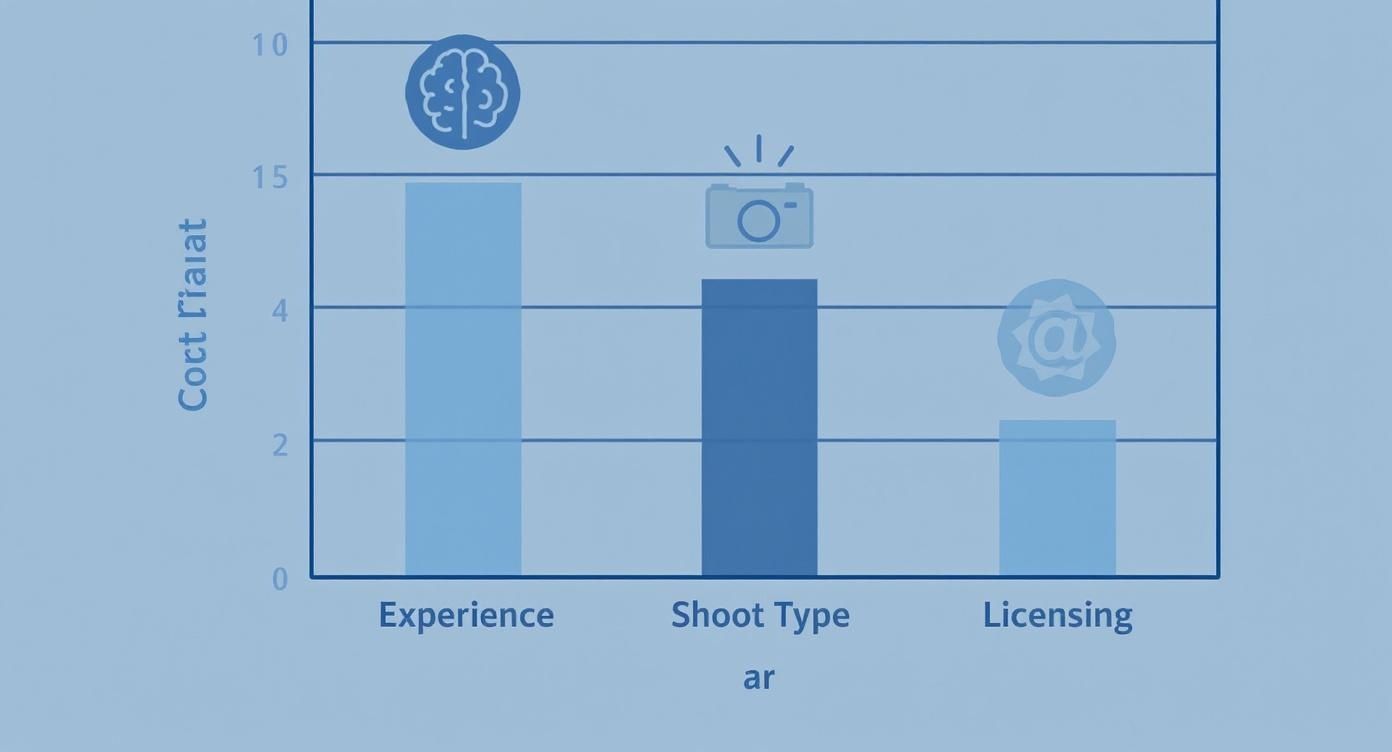
As you can see, it really boils down to three main things: the photographer's experience, how complex the shoot is, and what you plan to do with the images afterward. These are the pillars holding up the final cost.
Weddings and Major Events
Wedding photography is a serious investment for a reason—it’s a massive, all-in service. A wedding photographer isn't just showing up for a few hours. They're documenting one of the most important days of your life, a huge responsibility that involves tons of planning before and countless hours of editing after.
On average, couples in the U.S. spend between $2,500 and $5,000 on their wedding photography. Of course, packages for smaller, intimate elopements might start closer to $1,500, while a luxury, full-day affair with multiple photographers can easily sail past $10,000.
These packages are often a bundle of services that might include:
- Full-day coverage: This usually means 8-10 hours to capture everything from getting ready to the last dance.
- Second shooter: Having another photographer on hand is the best way to make sure no moment gets missed.
- Engagement session: A pre-wedding shoot that’s perfect for getting comfortable in front of the camera (and with your photographer!).
- Online gallery: A curated collection of hundreds of edited, high-resolution images ready for you to download and share.
The same logic applies to other big events, where the price naturally scales with the duration and complexity. And if your event also needs video, it's a good idea to learn about the process of hiring a videographer, since bundling photo and video services can sometimes save you some money.
To make things even clearer, let's lay out the pricing for different photography styles side-by-side.
Price Guide for Different Photography Specialties
| Photography Type | Average Package Range | What's Typically Included | Best For |
|---|---|---|---|
| Portraits & Headshots | $250 – $750 | 1-2 hour session, 1-2 locations, 15-30 edited digital images, online gallery. | Individuals, families, professionals needing updated profile photos, or small branding shoots. |
| Wedding Photography | $2,500 – $5,000+ | 8-10 hours of coverage, second photographer, engagement session, 400-800+ edited images. | Couples planning their wedding day, from intimate elopements to large-scale celebrations. |
| Commercial/Product | $500 – $2,500+ | Half-day or full-day rates, specific number of retouched product shots, usage rights. | Businesses needing high-quality images for websites, e-commerce stores, catalogs, or advertising campaigns. |
| Event Photography | $200 – $600/hour | Hourly coverage, candid and posed shots, quick turnaround on a selection of images, full gallery later. | Corporate events, birthday parties, conferences, and community gatherings. |
| Real Estate | $200 – $800 | A set number of interior/exterior photos, professional editing, quick delivery for listings. | Realtors, property managers, and homeowners looking to sell or rent a property. |
This table should give you a solid starting point. Remember, these are just averages—the final price will always depend on the photographer’s expertise, your specific needs, and where you're located.
Understanding How Photographers Structure Their Prices
When a photographer hands you a quote, that final number isn't just pulled out of thin air. There’s a method to the madness. Photographers use a few key pricing models to build their quotes, and once you know how they work, you'll have a much clearer picture of what you're actually paying for.
Think of it like a restaurant menu. Some spots are à la carte, where you pay for each item individually, while others offer a fixed-price tasting menu. Each approach has its place, and a photographer might use one model for headshots and a completely different one for a huge corporate event.
Let's break down the most common ways they put a price tag on their work.
Common Pricing Models Explained
You'll almost always run into one of four structures: hourly, per image, a day rate, or an all-inclusive package. Each one is a tool designed for a different kind of job.
-
Hourly Rate: This one’s as straightforward as it gets—you pay for the photographer's time on the clock. It’s perfect for shorter, well-defined gigs like professional headshots or a quick family session where everyone knows the scope from the start.
-
Per-Image Rate: With this model, you only pay for the final, edited photos you decide to keep. This is a go-to for commercial, product, or real estate photography, where the value is all about the specific number of finished images.
-
Day Rate: Got a bigger project, like a full-day conference or a multi-location commercial campaign? A flat day rate is the simplest way to go. It covers the photographer's time for a set block (usually 8-10 hours) and is pretty standard in the corporate and advertising worlds.
But for most people, the all-inclusive package is the most popular option by far. It bundles everything—the session time, a set number of edited images, printing rights, and sometimes even physical albums—into a single, upfront price.
Packages are great because they take all the guesswork out of the equation and often deliver the best bang for your buck, especially for big milestones like weddings.
For a really deep dive into how photographers calculate their rates, this photography pricing guide is a fantastic resource. Getting a feel for these structures is the first step. And if you’re comparing quotes, checking out different photography price packages can give you some valuable context.
Once you know these models, you can walk into a conversation with a photographer, confidently discuss your project, and make sure the final quote aligns perfectly with what you need.
Finding the Right Photographer for Your Budget

Let's be real: when you're looking for a photographer, it's easy to get fixated on the price tag. But the real goal is finding someone whose work speaks to you and delivers genuine value for what you're spending. A super-low price might catch your eye, but you have to make sure the quality holds up.
First thing's first: dive deep into their portfolios. You're looking for a consistent vibe—in the lighting, the mood, the way they compose their shots. Does their work look and feel like what you’re picturing for yourself? A killer portfolio is usually the clearest sign you’ve found a pro you can trust.
Asking the Right Questions
Once you’ve got a shortlist, it's time to chat. This is your moment to get past the numbers on a PDF and see if there's a real connection. A good conversation is everything.
Here are a few questions I always recommend asking:
- "Can you walk me through your editing style?" Ask to see some before-and-afters. This gives you a peek behind the curtain at their post-production magic.
- "What's the timeline for getting my photos back?" Knowing the delivery date for the final gallery saves a lot of guesswork and manages expectations.
- "What exactly do I get?" Get specific. How many edited images? What resolution will they be? And what are the rules around printing or sharing them online?
This initial talk is also a great time to explore how you can find local artists who might bring a unique creative flair to your project.
Reviewing the Contract Carefully
Okay, before you sign on the dotted line, read that contract. Seriously. This document is there to protect both of you by laying out every single detail you’ve agreed on. It should cover the scope of work, payment dates, cancellation policies, and who owns the rights to the images. Keep an eye out for any clauses on overtime fees or surprise costs.
A clear, detailed contract isn't just paperwork; it's the mark of a true professional. It gets rid of any grey areas and makes sure everyone is on the same page for a smooth, successful shoot.
The good news is the photography market is huge, with options for everyone from high-end collectors to families wanting a portrait. In fact, recent data shows a 36% jump in sales for photos under $5,000, which points to a super healthy and accessible market. This trend, highlighted on Artsy.net, proves there are incredibly talented photographers out there at almost every price point.
Got Questions About Photography Pricing? Let's Clear Things Up.
Diving into the world of photography pricing can feel a little confusing at first, but it all starts to make sense once you understand the "why" behind the numbers. Getting clear on these points helps you feel good about your investment. Let's walk through some of the questions I hear all the time.
First up is the retainer fee. Why do you have to pay this upfront? Think of it as a mutual commitment. When you pay a retainer, you're officially locking in your date and time on my calendar. It means I'm turning away any other potential jobs for that slot because it's reserved just for you. It’s a non-refundable fee that protects me from the financial hit of a last-minute cancellation and covers all the initial planning we do together.
What's Actually Included in the Price?
A big question that often comes up is about getting the unedited, or RAW, files. The short answer is, I don't typically include these in any package. A photographer's editing is a huge part of their signature style—it's the final touch that transforms a good photo into one of the stunning images you saw in my portfolio.
Handing over unedited files is like a chef giving you a pile of raw ingredients instead of the finished meal you came for. The final, edited images are the complete work of art, representing my full creative vision and professional standard.
So, could you get a discount if you ask for fewer photos? It's possible, but the price drop might be smaller than you think. A big chunk of the fee covers fixed costs that don't change, like my time, expertise, and gear for the shoot itself. Reducing the number of final images only shaves off a bit of the editing work, not the core expenses of the session.
What Happens If We Run Over Our Time?
It happens! What if your session goes a little longer than planned? Most photographers, myself included, have an overtime policy outlined right in the contract. Any extra time is usually billed at a set hourly rate, which can be a bit higher than the standard package rate. It’s always best to chat about this possibility beforehand. If you think you might need more time, booking a larger package from the start is almost always more affordable than paying premium overtime fees on the day.
Ready to find the perfect creative professional for your next project? At Creativize, we connect you with top-tier local talent to bring your vision to life. Explore portfolios, get quotes, and hire with confidence at https://creativize.net.