
Bringing on a freelance content creator is the quickest way to get specialized skills and scale your marketing without the overhead of a full-time employee. It’s about tapping an expert who can immediately start producing high-quality, authentic content that actually connects with your audience.
Why You Need a Freelance Content Creator

Let's get past the old "content is king" line. The real win in hiring a freelance creator is solving specific business problems with agility and deep expertise. So many businesses struggle to consistently create stuff people actually want to read or watch.
Think about it. A B2B tech company might have brilliant engineers but can't turn their complex ideas into compelling blog posts. A startup might desperately need dynamic social videos to get noticed but has zero in-house production skills.
This is where a freelance specialist becomes a strategic asset, not just an extra pair of hands.
Tap into Specialized Skills Instantly
Hiring a freelancer gives you immediate access to a professional who has spent years honing their craft. You aren't just hiring a "writer"; you're getting an SEO copywriter who knows how to rank for competitive keywords or a video editor who lives and breathes TikTok's algorithm.
This kind of specialized talent brings fresh perspectives and industry best practices to your team—all without the long, expensive slog of recruiting and training a full-time employee. Before you jump in, it helps to get the basics of this relationship down by learning what is a contractor job.
Hiring a freelancer is like calling in a specialist surgeon for a specific operation. You get precisely the expertise you need, exactly when you need it, ensuring the best possible outcome for a critical task.
Harness Authentic Voices to Build Trust
Today's audiences are smart. They can spot inauthentic, corporate-speak from a mile away. A great freelance content creator often has their own established voice and a deep understanding of a particular niche. They create content that feels genuine and builds a real connection.
That authenticity is everything for building brand trust and loyalty.
When you collaborate with creators who already speak your customers' language, you get to tap into their credibility to boost your own. A big part of how they do this is through great narratives. You can dive into our guide on mastering storytelling in marketing to see how powerful this can be.
The creator economy isn't some tiny trend anymore; it's a massive economic force. Valued at over $250 billion in 2025, the global market is on track to hit a staggering $480 billion by 2027. This explosion shows just how much brands now rely on independent creators to drive their communication and connect with customers.
Defining Your Project and Content Needs

Before you even think about searching for a freelance content creator, you need a blueprint. Trust me on this one. Diving in without a clear plan is the fastest way to burn through your budget, deal with mismatched expectations, and end up with content that completely misses the mark.
A vague request like "we need some blog posts" is a recipe for disaster. Does that mean 800-word SEO articles targeting bottom-of-funnel keywords? Or are we talking 2,500-word thought leadership epics designed to get passed around on LinkedIn? The tiny details are what separate a good hire from a great one.
This first step is all about translating your big-picture business goals into tangible content requirements. Getting this right from the jump ensures you and your creative partner are on the exact same page from day one.
Building Your Content Blueprint
Okay, let's get specific. Start by mapping out the exact content formats your strategy needs. But don't just list them out—tie each one to a concrete business outcome. This clarity is what will guide your search for the right kind of talent.
- SEO-Driven Articles: Trying to climb the Google ranks and capture organic traffic? You need a writer who lives and breathes keyword research and on-page optimization.
- Short-Form Video: Is your goal to blow up on TikTok or Instagram Reels? That requires a creator who gets the platform's vibe, knows the trends, and can edit with lightning speed.
- Technical Case Studies: Need to prove your product's value to a sharp B2B audience? You'll want to find a writer with real-deal experience in your industry who can spin complex data into a story that sells.
Beyond just the format, you have to nail down your brand's unique voice and tone. Are you the authoritative, professional expert? Or are you witty, casual, and conversational? Giving a creator clear examples of your style is non-negotiable. A great freelancer can adapt, but they need a target to aim for.
The Power of a Comprehensive Creative Brief
Once you've mapped out your needs, it's time to pour all of that thinking into a comprehensive creative brief. Think of this document as your project's single source of truth. It's the most powerful tool you have for preventing scope creep, confusion, and endless rounds of revisions.
A well-crafted creative brief does more than just outline tasks; it aligns vision. It’s the contract of understanding between your business goals and the creator’s execution, ensuring everyone is working toward the same definition of success.
Your brief should be a detailed guide, not a flimsy job post. It's where you set crystal-clear expectations for what "done" looks like—covering everything from key messaging and target audience personas to deadlines and the main call-to-action for each piece.
To make this dead simple, we've put together a checklist of the essentials every good brief should have.
Creative Brief Essentials Checklist
This table breaks down the core components you need to define. Answering these questions now will save you a world of headaches later.
| Component | Key Questions to Answer |
|---|---|
| Project Overview | What’s the high-level goal? What problem are we solving for the audience? |
| Target Audience | Who are we talking to? What are their pain points, goals, and where do they hang out online? |
| Key Message | What is the single most important thing we want the audience to take away from this content? |
| Brand Voice & Tone | How should we sound? (e.g., expert, friendly, humorous). Can you provide examples? |
| Deliverables | What are the exact pieces of content needed? (e.g., 1x 1500-word blog post, 3x social media snippets). |
| Call to Action (CTA) | What do we want the reader/viewer to do next? (e.g., Sign up for a demo, download an ebook). |
| Success Metrics | How will we measure success? (e.g., Organic traffic, conversion rate, engagement). |
| Timeline & Budget | What are the key deadlines for drafts and final delivery? What is the approved budget for this project? |
Once you've got these answers locked in, you'll have a rock-solid foundation for your project.
Putting in this work upfront saves so many hours of back-and-forth later on. To help you get started, we've developed a guide and some handy resources you can adapt. You can find everything you need by checking out our creative brief template and guide. Seriously, this structured approach is the key to a successful, long-term partnership when you hire a freelance content creator.
Alright, you've got your project blueprint dialed in. Now for the fun part: finding a creative partner to bring it all to life.
But where do you even start? The options can feel like a firehose of talent, but a little strategy goes a long way.
The freelance world is booming. We're talking an estimated 1.57 billion freelancers across the globe as of 2025, making up almost half of the entire workforce. That's a massive talent pool, which is great news. It also means you need a solid game plan to cut through the noise and find your perfect match. You can get a sense of the scale of the exploding freelance platform market at amraandelma.com.
Where to Source Top Talent
Don't just stick to one platform and hope for the best. You'll have much better luck if you cast a wider net and think about your search as a multi-channel sourcing strategy.
- Niche Freelance Platforms: This is where you'll find the specialists. Platforms like ours, Creativize, are built specifically to connect businesses with high-caliber creative pros. The focus means you're often looking at a more curated, pre-vetted group of people compared to the massive, do-everything marketplaces.
- Professional Networks: LinkedIn is an absolute goldmine for this. Get comfortable with its advanced search filters. Punch in terms like "freelance writer," "video creator," or your specific industry niche. See who your connections recommend and pay attention to who the leaders in your space are working with.
- Industry-Specific Job Boards: Almost every industry has its own little corner of the internet for jobs. For writers, a classic example is ProBlogger. These niche boards attract specialists who are serious about their craft, not just dabbling.
And please, don't just post a job and wait for the applications to roll in. Be proactive. Use the keywords from your creative brief to actively search profiles. Look for creators whose past work and personal descriptions really vibe with the style and expertise you’re after.
Vetting Creators Like a Pro
Getting a list of candidates is just step one. The real work happens during the vetting process. This is how you separate the true professionals from the hobbyists.
It’s less about their follower count and more about their professional habits and strategic mind. A portfolio full of pretty work is nice, but a portfolio that shows results? That's what you're looking for.
When you're digging into a portfolio, ask yourself these questions:
- Can I see the strategy? Look for case studies or project descriptions that explain the why behind the work. Did their blog post actually drive traffic? Did that video campaign boost engagement?
- Is the quality consistent? A couple of knockout pieces mixed in with a lot of mediocre content can be a red flag. You want to see a consistently high level of quality across their entire body of work.
- Does their style feel like my brand? This is crucial. Pay close attention to their tone, visual aesthetic, and overall vibe. Can you easily imagine their work with your company's logo on it?
A standout portfolio isn’t just a gallery of pretty pictures or well-written articles. It’s a showcase of problem-solving. The best creators show you how their work solved a real business challenge, not just that they know how to use the tools.
A little extra digging can also tell you a lot. Learning how to effectively search social media for vetting purposes can give you valuable context on a creator’s professionalism and how they present themselves to the world.
And if you’re specifically looking for writers, we’ve put together a whole guide on hiring content writers. It's packed with practical tips for spotting top-tier talent.
Running an Effective Hiring Process
Alright, you've got a shortlist of promising candidates. Now for the real work. Moving from a strong portfolio to a signed contract takes more than just a gut feeling; you need a clear, fair way to evaluate skills, professionalism, and whether they’ll actually be a good fit for your team.
An effective process ensures you hire more than just a skilled content creator—you find a genuine partner for your brand. This is your chance to see how they think, communicate, and handle a real-world task before you commit.
Asking Insightful Interview Questions
The interview is where you go beyond the portfolio. You aren't just trying to confirm they can do the work. You’re digging into their strategic thinking, how they solve problems, and what it’s like to collaborate with them. Generic questions just won't cut it.
Instead, focus on questions that peel back the curtain on their process and professionalism. Here are a few I like to use:
- On Problem-Solving: "Tell me about a time a project went off the rails. What happened, and how did you get it back on track?"
- On Handling Feedback: "How do you prefer to receive feedback? Walk me through a time you used critical feedback to make a final piece better."
- On Brand Alignment: "Based on what you've seen of our brand, what's one piece of content you think is missing from our strategy and why?"
Questions like these reveal way more than just asking someone to list their skills. You're looking for a partner who thinks critically, not just someone who can check off tasks.
The infographic below shows the high-level flow of finding talent, which leads right into this crucial hiring stage.
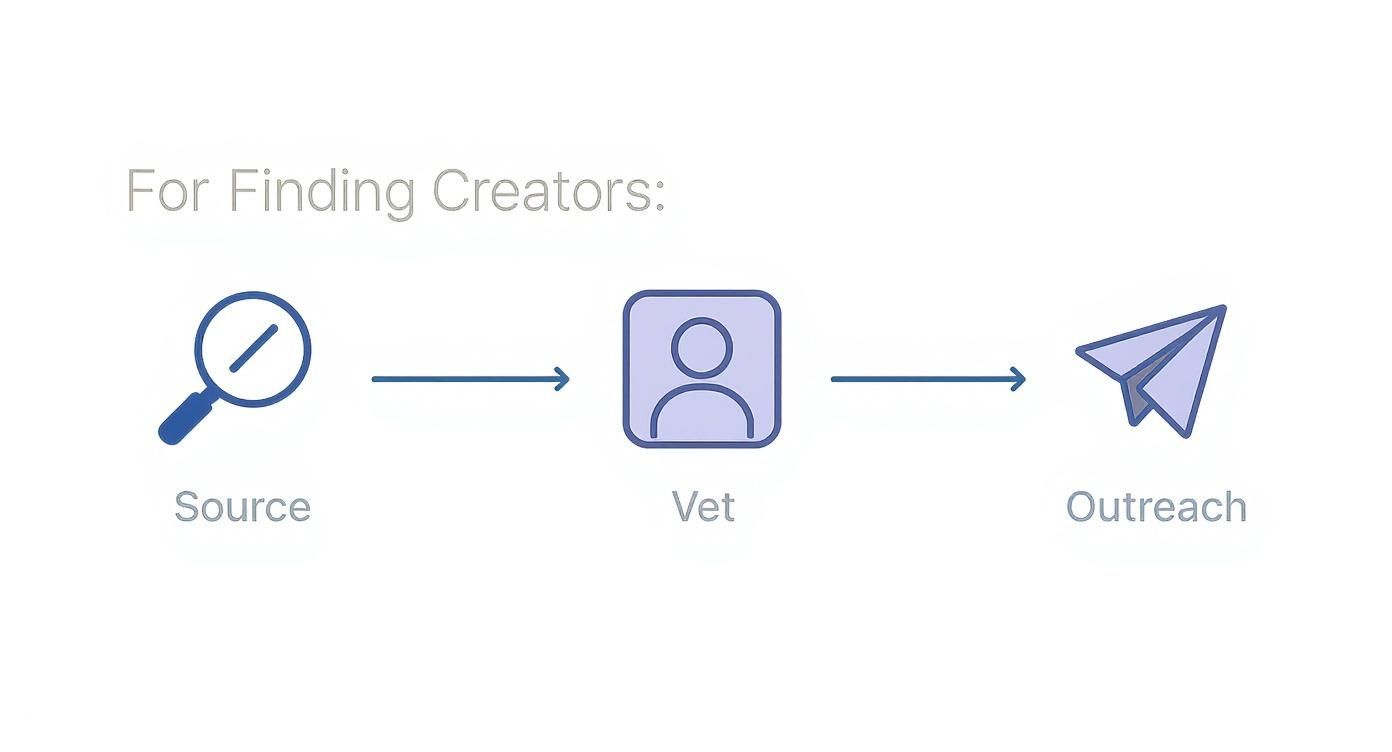
As you can see, sourcing and vetting are just the warm-up. The real decisions happen now.
The Value of the Paid Test Project
If there's one tool you need in your hiring arsenal, it's the paid test project. Seriously, don't skip this. This isn't about getting free work; it's a small, relevant task that shows you their skills in action.
A portfolio shows their greatest hits. A test project shows you how they work with you.
Your test project should be:
- Concise: Something they can knock out in 2-3 hours, tops.
- Relevant: Directly related to the kind of work you’ll be giving them.
- Paid: Always, always compensate them fairly for their time.
For example, you could ask a writer to draft a 500-word intro for a blog post on a specific topic. Or ask a video editor to cut a 30-second social clip from some raw footage you provide.
When you get the submission back, look beyond the final product. How was their communication? Did they follow instructions? Were they on time? Those professional traits are often just as important as the creative output itself.
Once you have this tangible piece of work, comparing candidates and making a final decision becomes so much clearer.
After you've found your perfect creator, it's time to make it official. For help creating a rock-solid agreement, check out our essential freelancer contract template. It's designed to protect both you and your new hire while setting clear expectations from day one.
Onboarding Your Freelancer for Success
You’ve found them. The perfect freelance content creator. But hold on—the work isn’t over just because the contract is signed.
Even the most promising partnership can get off to a rocky start with a clumsy, thrown-together onboarding process. A smooth, structured welcome is what turns a great hire into a long-term, high-value part of your team.
This is about more than just a welcome email. It's about genuine integration. The goal is to build a collaborative relationship from day one by giving your new creator all the context, tools, and support they need to hit the ground running.
Creating a Seamless Integration Plan
The first week sets the tone for everything that follows. When you have a solid plan, you're showing the freelancer you respect their time and are truly invested in their success. It cuts out all the frustrating back-and-forth that can kill momentum before a project even kicks off.
To make this happen, focus on providing immediate clarity and access. Your onboarding kit should be ready to go:
- Brand & Style Guides: Don’t make them guess. Hand over detailed docs on your brand voice, tone, visual identity, and any specific formatting rules.
- Tool & System Access: Get them added to your project management software (like Asana or Trello) and your main communication channels (like Slack or Microsoft Teams) right away.
- Key Points of Contact: Make it crystal clear who they should go to for what—editorial questions, admin and payment queries, or technical issues.
- Initial Project Briefing: A kickoff call is non-negotiable. Use it to walk through the first assignment, answer their questions, and make sure you're both perfectly aligned on expectations.
For a deeper dive, our guide on the new client onboarding checklist offers a template you can adapt to cover all your bases and start the relationship off right.
Think of a great onboarding process as an investment in efficiency. Every question you answer upfront is an hour of confusion and revisions you save down the road. It’s about setting your freelance creator up to win.
The freelance economy isn't the wild west anymore; it’s professionalizing fast. The global market for freelance platforms is projected to jump from $5.4 billion in 2024 to an incredible $13.3 billion by 2030. Top-tier freelancers expect clear, organized processes from their clients, and a solid onboarding experience is table stakes.
Fostering Collaboration and Growth
Managing a freelancer effectively is all about trust and communication, not micromanagement. The key is to find a rhythm for check-ins and feedback that feels supportive, not restrictive. A weekly sync-up call or a quick daily stand-up on Slack can keep everyone aligned without creating a feeling of being watched over.
When it's time to give feedback, be specific and constructive. Always tie it back to the goals in your creative brief. Instead of just saying, "I don't like this," try something like, "This section is great, but could we tie the conclusion back more directly to our target audience's main pain point?"
This kind of guidance empowers the creator to improve their work and genuinely understand your strategic goals. When you treat them like a true partner, you're building the foundation for a successful, lasting collaboration.
A Few Common Questions About Hiring Creators
Even with a solid plan, jumping into hiring a freelancer for the first time can feel a little daunting. You're probably wondering about rates, who owns what, and what really matters when you're choosing someone to work with.
Let's walk through some of the big questions that come up. Getting these details sorted out upfront is the secret to a smooth partnership and avoiding those classic rookie mistakes.
How Much Should I Actually Budget for a Freelance Creator?
This is the million-dollar question, isn't it? The honest answer is: it really depends. Rates are all over the map and hinge on experience, the type of content, and how deep the project goes.
A blog post, for example, could run you anywhere from $0.10 to over $1.00 per word. A sharp video creator might quote a few hundred bucks for a simple project or several thousand for something more involved.
Instead of just hunting for the lowest price, try framing your budget around the value you expect to get. High-quality content that actually brings in leads or sales isn't just an expense—it's a serious investment. A quick search on creator platforms can give you a ballpark, but always remember that top-tier talent usually delivers a much higher return.
Here's a good way to think about your content budget: Are you just buying a generic tool, or are you investing in a custom solution built to solve your specific problem? The best freelancers provide the latter, and their rates reflect that.
What’s the Difference Between a Creator and a Strategist?
It’s easy to mix these two up, but they play very different roles. Nailing this distinction is key to hiring the right person for the job.
- A Content Creator is all about execution. They're the pros who write the articles, shoot the videos, and design the graphics. You give them a brief, and they bring it to life.
- A Content Strategist handles the big picture. They're the ones doing audience research, mapping out sales funnels, and digging into the data to figure out what to create and why.
Sure, some seasoned freelancers can wear both hats, but you need to know what you really need right now. Are you looking for someone to run with a plan you've already built, or do you need help architecting the plan from scratch?
How Do I Protect My Intellectual Property?
This is a huge one, but thankfully, it’s easy to handle with the right paperwork. The single most important thing you need is a formal contract with a "work for hire" clause.
That little legal phrase is your best friend. It means that once you’ve paid that final invoice, all the rights and ownership for the content officially transfer over to your company. Simple as that.
It's also a good idea to include a confidentiality or non-disclosure agreement (NDA) to protect any sensitive business info you share. While many platforms have standard terms that cover this, a simple, custom contract is always a smart move for any project you care about.
What Are the Most Important Skills to Look For?
A killer portfolio is great, but the best freelance partners have a few professional traits that are absolutely non-negotiable for a good working relationship.
- Reliability: This is everything. Do they hit deadlines? Do they communicate proactively if something comes up? You need someone you can count on, period.
- Adaptability: A great creator can take constructive feedback and pivot without getting their ego bruised. They get that their job is to align with your brand's voice and goals.
- Communication: A freelancer who asks smart questions and gives clear updates isn't just a contractor; they're a partner. Honestly, this is often more valuable long-term than raw creative talent alone.
Ready to find a professional who ticks all these boxes? Creativize connects you with a curated community of vetted creative experts. Our platform makes it simple to discover, evaluate, and hire the perfect freelance content creator for your next project. Find Your Creative Partner Today.